
Guardianship
Protecting vulnerable individuals while preserving their independence.
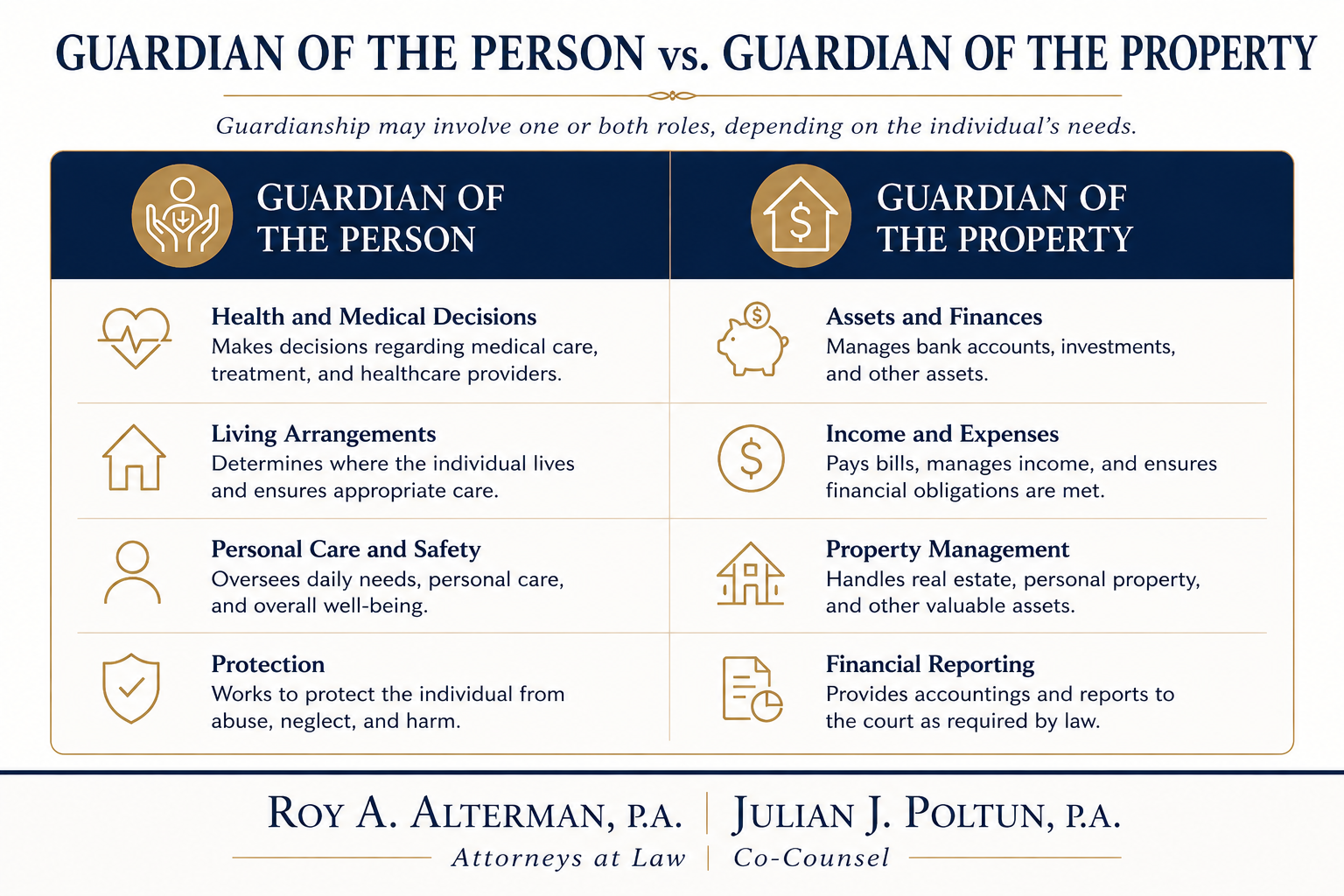
Guardianship is a court-supervised process used when an individual is unable to make some or all decisions concerning personal care, health, safety, or financial affairs.
A guardianship may become necessary when an adult can no longer safely manage important decisions because of illness, injury, cognitive decline, developmental disability, or another condition affecting decision-making capacity. Because guardianship can restrict important legal rights, Florida courts consider whether less restrictive alternatives can adequately protect the individual before appointing a guardian.
Guardian Advocacy
Guardian advocacy is a less restrictive alternative to traditional guardianship for certain individuals with developmental disabilities. It allows the court to authorize a guardian advocate to assist with specific personal, healthcare, or financial decisions without a formal adjudication of incapacity.
The individual retains all rights not specifically delegated to the guardian advocate, helping preserve as much independence as possible.
Our office assists families with determining whether guardian advocacy is appropriate, preparing the necessary filings, and navigating the court process.
When May Guardianship Be Necessary?
Families often consider guardianship when a loved one:
- Can no longer safely manage finances or property;
- Is unable to make appropriate medical or residential decisions;
- Is vulnerable to financial exploitation, abuse, or neglect;
- Has experienced significant cognitive or functional decline; or
- Does not have an effective Power of Attorney, Trust, healthcare directive, or other appropriate alternative in place.
Every situation is different. The appropriate solution depends upon the individual's abilities, existing estate-planning documents, financial circumstances, and level of assistance required.
Limited and Plenary Guardianship
Florida law seeks to preserve an individual's rights and independence whenever possible.
A limited guardianship removes only those rights that the court determines the individual is unable to exercise safely.
A plenary guardianship involves a broader delegation of decision-making authority and is generally appropriate only when the individual lacks the ability to exercise substantially all delegable rights.
The court may also consider alternatives such as a Durable Power of Attorney, Trust, advance directive, representative payee, or other less restrictive arrangement.
Guidance Through the Guardianship Process
Guardianship proceedings involve significant procedural, financial, and ongoing reporting requirements. Our office assists families and guardians throughout the process, including incapacity proceedings, petitions for appointment of a guardian, guardianship administration, and related court matters.
Whether you are concerned about a vulnerable family member or have been asked to serve as guardian, we can help you understand the available options and determine an appropriate path forward.
To schedule a consultation today, please call the law office at 321-726-0009 or complete the contact form.